Brown's Guide to Georgia

Search


Do It Yourself Tours

Walking and Driving tours of Georgia

Archive for the ‘Environmental’ Category

Georgia Barrier Islands

Thursday, July 2nd, 2009

Georgia has over a dozen major barrier islands and dozens of smaller islands between the Atlantic Ocean and the mainland. Among the major islands, only St. Simons, Sea Island, sapeloferryrgb750.jpgSkidaway and Jekyll are connected to the mainland by a causeway. The other islands must be reached by ferry or by private boat and only Cumberland and Sapelo (pictured at right) have regularly scheduled ferry service.

Sapelo Island Ferry Schedule
Cumberland Island Ferry Schedule

Some charter operators on the coast provide, or can be persuaded to provide, boat transportation to islands without a causeway or regularly scheduled ferry service.

Red more about Georgia’s barrier islands and create your own tour, using the information in the profiles.

The Liberty Trail

Wednesday, July 1st, 2009
 Georgia > Coast > Liberty County > Midway

revolutionrgb400.jpgThe American Revolution in Georgia spring vividly to life on this do-it-yourself tour of Liberty County. See the Revolutionary War-era Fort Morris and Midway Museum and Historic District, as well as the environmental richness and African-American heritage of the region.

For centuries, Liberty County has held a mystical power over explorers. The Historic Liberty Trail is a unique driving tour offering a diverse experience integrating history, culture and ecology. It covers 10 stops, including: Midway Museum and Historic District, Cay Creek Wetlands, Geechee Kunda Cultural Arts Center, LeConte-Woodmanston Botanical Gardens, Dorchester Academy and Museum, Fort Stewart Museum, Melon Bluff Nature and Heritage Preserve, Seabrook Village, Fort Morris State Historic Site, and Sunbury Cemetery.

Begin the Historic Liberty Trail Driving Tour
Begin your tour at Exit 76 off I-95, where an information kiosk gives a glimpse of The Historic Liberty Trail. Visitors traveling the trail explore Liberty County, home of Dr. Lyman Hall and Button Gwinnett, signers of the Declaration of Independence. Your first stop is the Midway National Historic District. Leaving the kiosk, turn right (west) on US 84. Drive 2.2 miles, turn right on Martin Road. Drive 1.3 miles to arrive at the Midway National Historic District. The cemetery is straight ahead, the church and museum are on the right. For a map showing all of the points on the tour, click here.

Midway National Historic District
Midway Museum, honors the community famed as Georgia’s Cradle of Liberty. photo_midwaymuseum.jpgBrowse through the museum, built in the raised cottage-style architecture, typical of 18th Century plantation houses. Exhibits, documents and furnishings used in coastal Georgia homes from colonial days until the Civil War reanimate the love of Liberty. Tour the grounds which include a detached kitchen, salt vat and extensive nature trail. One of the best sources in the area for genealogical research. Also on the property is the Midway Church, built in 1756, was burned during the American Revolution and rebuilt in 1792. In this white-frame, New England-style church, Sherman’s cavalry set up foraging headquarters during the Civil War. Today, giant live oaks draped with Spanish moss shade about 1,200 graves in the cemetery, among them two generals of the American Revolution and Governor Nathan Brownson. During the Civil War, Sherman’s cavalry plundered county plantations and corralled animals in the walled, two-acre cemetery.

Days and Hours: Tuesday-Saturday: 10am-4pm, Sunday: 2pm-4pm
Facilities: Small gift shop with a good selection of books on local history.
Restrooms available.
Fees: Small fee required. Group rates available.
For More Information: (912) 884-5837

Cay Creek Wetlands
DIRECTIONS: Leaving Midway Museum, turn left on US 17. Drive 0.5 miles, at the traffic light turn left on US 84. Drive 2.4 miles until you reach Charlie Butler photo_caycreek.jpgRoad. Turn right on Charlie Butler Road. Travel approximately 0.2 miles until you see the Cay Creek Wetlands sign on your right. Get a map.

As an excellent example of tidal, freshwater wetlands, Cay Creek Wetlands provide a unique opportunity for education and appreciation. The area is rich in diversity. Bay, Cypress and Oak trees are abundant, as are Palms, Palmettos and Magnolias. The area provides habitats for numerous species of animals, including birds, mammals, reptiles, amphibians and insects. The site is several different ecosystems. Each has specific traits that give it character, but the distinctions may be overlooked by the casual observer. Look closely and you may notice the differences in plant and animal life in those areas that are permanently wet when compared with areas that are intermittently wet and dry. The site has its history, too. Look for the low earthen berms that cross the landscape. In some instances, they may be the high ground on which you stand. These are the remains of dikes that were used for growing rice. Rice production was common to the area in the 19th Century. Cay Creek Wetlands has seen exciting activity recently with the completion of a boardwalk, allowing visitors to easily access the wetlands in both wet and dry seasons. An interpretive center building, designed to house exhibits and information, will soon follow.

Days and Hours: Monday-Friday: 8am-4pm
Facilities: None.
Fees: Free.
For More Information: (912) 884-3344

Geechee Kunda Cultural Arts Center
DIRECTIONS: Take a right onto Charlie Butler Road out of the drive and travel 0.7 miles, turn right onto Historic Cay Creek Road, a well-maintained, unpaved road. Only 3.8 miles from US 17. Enjoy the canopy of moss-draped oaks and the incredible marsh vistas as well as vibrant flowers and coastal wildlife on this scenic road. Once you’ve reached US 17 take a left and travel through the quaint town of Riceboro. Travel approximately 4.6 miles and turn left onto Ways Temple Road, Geechee Kunda is on the right 0.2 miles. Note: Nice picnic facilities at US 17 junction. Get a map.

Geechee Kunda (a Sarakole’ word meaning compound) is indicative of the culture of Gullah Geechees. Geechee Kunda is reflective of the family compounds that exist throughout the Gullah Geechee areas of the Carolinas, Georgia and Northern Florida as well as Africa. It is a living institution dedicated to preserving the culture of a living people. Its museum is filled with African art, textiles, painting, tools, utensils, implements, craftworks and essentials used by Gullah Geechees from the 1700’s to the 1900’s. The museum houses artifacts from the period of slavery and it’s an educational facility for lectures, workshops, classes, seminars, weddings and more.

Days and Hours: Group tours and classes available, call for an appointment.
Facilities: Gift shop, meeting and classroom space.
Fees: Call for further information.
For More Information: (912) 884-4440

LeConte-Woodmanston Botanical Gardens
DIRECTIONS: Leaving Ways Temple Road turn right onto US 17 toward Riceboro. Travel approximately 0.7 miles and turn left onto Sandy Run Road. photo_lecontergb.jpgTravel 4.3 miles then turn left at stop sign onto Barrington Ferry Road. Barrington Ferry Road is unpaved, but well-maintained. Look for wood storks, ospreys, egrets and herons that feed in the wetlands. Almost one mile south of the intersection you will find a historic marker for the Bartram Trail on the left. The sign marks the entrance to LeConte-Woodmanston. Get a map.

LeConte-Woodmanston, formerly the home of Dr. Louis LeConte, flourished as one of Georgia’s earliest inland swamp rice plantations and is now a nature preserve. Dr. LeConte achieved international fame in scientific circles as did his sons, John and Joseph. John was the first president of the University of California at Berkeley. Joseph and his friend, John Muir, co-founded the Sierra Club. Today, Louis LeConte’s world-famous 18th Century botanical gardens are being recreated with a myriad of antique plants. Visit the cypress forest and walk the interpretative trail along the earthen rice dikes leading through the Bulltown Swamp black-water eco-system. Take a stroll along the Avenue of Oaks or bask in an 18th Century nature experience. They are all part of the Historic Bartram Trail.

Days and Hours: Typically open Tuesday, Wednesday and Friday: 10am-3pm or by appointment. Call to verify times before visiting.
Facilities: A small fee required.
Fees: Restrooms.
For More Information: (912) 884-6500

Dorchester Academy and Museum
DIRECTIONS: Leaving LeConte-Woodmanston, follow drive back to Barrington Ferry Road. Turn right and follow road until it dead ends into US 17, approximately 5 miles. Turn left and travel another 2.1 miles to the intersection of US 17 and US 84, turn left on US 84 and drive 2 miles. Dorchester Academy is on the left. Get a map.

The Academy, today an active community center and museum, was founded after the Civil War as a school for freed slaves. By 1917, the fully-accredited high school had eight frame buildings and 300 students. In the 1940s, its academic program ended when a consolidated school for black youth was built in nearby Riceboro. The brick school building, an example of Georgian Revival style architecture is where Dr. Martin Luther King, Jr. prepared for the 1963 Birmingham campaign, one of the first major victories of the Civil Rights Movement.

Days and Hours: Tuesday-Friday: 11am-2pm, Saturday: 2pm-4pm
Facilities: Free.
Fees: Pavilion with barbecue pit and restrooms.
For More Information: (912) 884-2347

Fort Stewart Museum
DIRECTIONS: Leaving Dorchester Academy, turn left (west) on US 84. Travel approximately 10 miles to General Stewart Way and take right fork. Travel 0.8 miles and turn left onto North Main Street. Travel 0.6 miles through historic Hinesville, where you will enjoy specialty shopping and excellent restaurants. Traveling another 0.9 miles take the right fork and drive 0.1 miles to General Screven Way. Take a right onto General Screven Way and drive 0.9 miles to the main entrance of Fort Stewart. Continue straight on GA 119 for 0.3 miles. From GA 119 turn left onto Bunker Road (the first left). Follow Bunker Road to a stop sign. At the stop sign make a left onto Frank Cochran Drive. The museum is on the immediate left. Get a map.

Fort Stewart, the largest military post east of the Mississippi, is home to the U.S. Army’s 3rd Infantry Division (Mech) and is the summer training grounds for the National Guard. At the museum, Liberty County’s military heritage is showcased in ever-changing exhibits featuring objects from World War II, Vietnam, Korea, Desert Storm and present-day military activities.

Days and Hours: Tuesday-Saturday: 10am-4pm Closed Mondays, Thanksgiving, Christmas, New Year’s Day and Federal Holidays.
Facilities: Gift shop, snack machine, restrooms and picnic area.
Fees: Free. Group tours upon request.
For More Information: (912) 767-7885

Please Note: Due to heightened security, Fort Stewart is now a closed post and requires all visitors to stop at the main gate. At the gate visitors must provide proof of registration, insurance and drivers license to receive a visitor’s pass.

Melon Bluff Nature and Heritage Preserve
DIRECTIONS: Leaving Fort Stewart drive straight on GA 119 until it dead ends into US 84 turn left, approximately 0.5 miles. Travel approximately 15 miles to I-95, as you cross I-95 travel another 2.9 miles and you will see Melon Bluff on your right. Get a map.

Nestled amongst 3,000 unspoiled acres on Georgia’s coast, Melon Bluff is set amid gorgeous, moss-hung oaks at the river’s edge. Melon Bluff offers 25 miles of grassy, forest trails for hiking, biking, picnics and riding. Birding is the prime attraction, offering 309 species, many uncommon and endangered. Visitors can find overnight accommodations ranging from a restored barn to a plantation cottage. On site, there is a delightful gift shop, a screened pool and a facility for small conferences.

Days and Hours: Saturdays: 9am-4pm from September 15th through May 15th. Public events are scheduled throughout the year.
Facilities: Overnight accommodations, full gourmet meal service, scheduled wagon rides, kayak expeditions, gift shop, pool and facility for small conferences.
Fees: Prices vary - Call for further information.

Seabrook Village
DIRECTIONS: From Melon Bluff, turn right onto Islands Highway. Travel 0.7 miles until you come to Trade Hill Road (Seabrook Village signs will be on your photo_seabrookrgb.jpgleft). Turn left on to Trade Hill and drive 0.6 miles. Seabrook Village office will be on your left. Get a map.

An award-winning living history museum, Seabrook Village features eight turn-of-the-century buildings on a developing 104-acre site. Visit the one-room Seabrook School where “reading, writing and ‘rithmetic were taught to the tune of a hick’ry stick.” Or try your hand at grinding corn into meal and grits or washing clothes on a scrub board. Planned group visits are fully interactive as costumed interpreters engage visitors in all aspects of old time village life. On-going exhibits include the grave art of Cyrus Bowens, featured in Drums and Shadows, and the Willis Hakim J. Hones Material Culture Collection of hand-made items from a peanut roaster to twig furniture.

Days and Hours: Tuesday-Saturday: 10am-4pm. Interactive tours available for groups of 15 or more. Special educational and Girl Scout programs available.
Facilities: Seabrook Village Museum Shop and Craft Gallery, meal service (by reservation), restrooms.
Fees: Small fee required.
Group Tours: Call for rates, brochure and availability.
For More Information: (912) 884-7008

Fort Morris State Historic Site
DIRECTIONS: Leaving Seabrook, turn left on Trade Hill Road. Drive 0.2 miles to the intersection of Fort Morris Road. Turn left, drive 2 miles. The entrance to Fort photo_fortmorrisrgb.jpgMorris is on the right. Get a map.

Fort Morris was built to defend the former town of Sunbury, once a bustling seaport second in Georgia only to Savannah. Fort Morris was used as a coastal fortification during the Revolutionary War. The earthen works were reconstructed during the War of 1812 and were later used as a Civil War Encampment. The site’s museum features displays of civilian and military life during Georgia’s Colonial, Revolutionary and Antebellum past. During periodic special events, reenactments bring Fort Morris alive with roaring cannons and the measured tread of marching soldiers. Listen! You can almost hear the fife and drums.

Days and Hours: Tuesday-Saturday: 9am-5pm, Sunday: 2:00pm-5:30pm. Closed Thanksgiving, Christmas, New Year’s Day, and Mondays, except some legal holidays.
Facilities: Museum, gift shop, pioneer camping, picnic area, restrooms and nature trail.
Fees: Small fee required.
For More Information: (912) 884-5999

Sunbury Cemetery
DIRECTIONS: Leaving Fort Morris, turn right onto Fort Morris Road. Travel 0.7 miles past Sunbury Village and turn left onto Sunbury Road (dirt). Drive 0.1 miles to Dutchman Cove Road. Drive 0.1 miles to the end of the road, it will dead end into the cemetery. Get a map.

From the beginning of the town’s history, public burials were performed at a community cemetery located at the southeast corner of Church Square. Sunbury Cemetery housed the remains of members from the Midway Congregational Church, Sunbury Baptist Church and others. A sense of integrity remains even though no complete interment records are known to exist for the cemetery. Most of the markers were gone by the 1870’s. Of the thirty-four remaining, the oldest is dated 1788 and the most recent, 1911. Two iron fenced family enclosures are carefully arrayed with neatly lined markers for the Dunham and Fleming-Law families. The most famous tombstone is a full-length marker for Reverend William McWhir. The graves of Josiah Powell and Samuel Law, notables of the town of Sunbury, are also marked.

The cemetery is open year-round and is free to the public.

Sapelo Island Tours

Sunday, June 28th, 2009
 Georgia > Coast > McIntosh County > Sapelo Island

sapelo.jpgVisitors may tour this Georgia barrier island with the National Estuarine Research Reserve, with island native Maurice Bailey or on their own from the seat of a rental bike from Comyam’s Campground.

Sapelo native Maurice Bailey provides tours of Sapelo Island, including the beaches and historical ruins. Each tour is three hours but may be extended upon request. Ogeechee Tours or Groups as well as individuals are welcomed.

The Sapelo Island National Estuarine Reserve provides tours for the public, featuring the natural and cultural history of Sapelo on Wednesdays and Saturdays and on Fridays from June 1 through Labor Day. Special programs and activities are scheduled throughout the year. Reservations are required for these tours. For more information on these tours, contact the Sapelo Island Visitor Center (link below).

Comyam’s Campground has rental bikes so you can tour the island on your own. Comyam’s Campground is located in historic Hog Hammock Community on Sapelo, a community owned by descendants of slaves that dates back to the late 1800s. The campground has a marshside view, showers and restrooms. Comyam’s also provides tours to campers for $8 per person.

A public ferry to Sapelo runs 7 days a week, but space is limited and arrangements must be made in advance. The ferry schedule is available on the Sapelo Ferry website, and the phone number for reservations is 912-437-3224.

Links and contacts numbers:

Georgia’s Natural Wonders

Wednesday, June 17th, 2009

Charles Seabrook, the author of Cumberland Island: Strong Women, seabrooklrgb198.jpgWild Horses, and who, for many years, wrote the weekly column, “Wild Georgia” for the Atlanta Journal Constitution, selected his “35 Natural Wonders in Georgia You Must See Before You Die.” Here are Charles’ 35 choices in bold face type, along with his brief comments in italic with links to ways to find out more about them.

Okefenokee Swamp. Word famous wetland.

Marshes of Glynn. Far-as-the-eye-can-see coastal salt marshes that inspired poet Sydney Lanier to write his famous poem.

Cumberland Island National Seashore. Former President Jimmy Carter called it one of his most famous places on Earth.

Ossabaw Island. Unspoiled barrier isle; amazing natural beauty.

Cabretta Beach, Sapelo Island. One of Atlantic coast’s most beautiful undeveloped beaches.

Woody Pond, Harris Neck National Wildlife Refuge. In spring, thousands of egrets, herons and endangered wood storks form spectacular nesting colonies.

Ebenezer Creek. National Natural Landmark; harbors 1,000-year-old bald cypress trees with huge buttresses eight-to-twelve feet wide.

Altamaha River. Lower Altamaha called “Georgia’s Amazon” for the lush, jungle-like growth along its banks; river’s entire 137 miles unfettered by dams.

Broxton Rocks Ecological Preserve. Rugged sandstone rock outcrop deep in South Georgia; sculpted over centuries by water into fissures and shallow ravines that are now havens for many rare plants.

Ohoopee Dunes State Natural Area. Sometimes called “Georgia’s Desert”  because of its dry, sandy soil and scrubby vegetation. Biologists call it an “enchanting environment.”

Wade Tract Preserve. Privately-owned 200-acre swath of old-growth long leaf pine and wire grass; one of the few remaining examples of great long leaf forest that once covered Coastal Plains region.

Providence Canyon State Park. Eroded land that transformed into a place of great beauty; sometimes called Georgia’s “Little Grand Canyon.”

Doe Run Pitcher Plant Bog Natural Area. Lush growths of carnivorous pitcher plants in spring.

Pine Mountain. Spectacular view from Dowdell’s Knob of valley below. President Franklin D. Roosevelt often came here to picnic and meditate.

Warm Springs. Naturally warm, soothing water bubbling from Earth; FDR came here for treatment of polio.

Oaky Woods Wildlife Management Area. See for yourself why conservationists are intent on saving from development this place for roaming black bears and rare wild-flower habitats.

  • Read more about Oaky Woods and how you can help save over 19,000 acres of wilderness from development. Sign up for the Oaky Woods newsletter

George L. Smith State Park. Bald cypresses growing in pond are magnificent in fall when they take on their orangish-bronze tints.

Sprewell Bluff State Park. Little known gem on Flint River, which is one of South’s most beautiful and interesting streams; 3-mile trail offers superb views of river and rocky cliffs.

Palisades Unit, Chattahoochee River National Recreation Area. Spectacular greenspace in midst of sprawling bustling metro Atlanta.

Graves Mountain. Rockhounds from all over the world come here for amazing array of rocks and minerals.

Stone Mountain / Arabia-Davidson Mountain / Panola Mountain. Huge geological wonders that sport some of Georgia’s most colorful arrays of wildflowers in spring and fall.

Tallulah Gorge. Hard granite walls fall perpendicular to land above, forming steep cliffs.

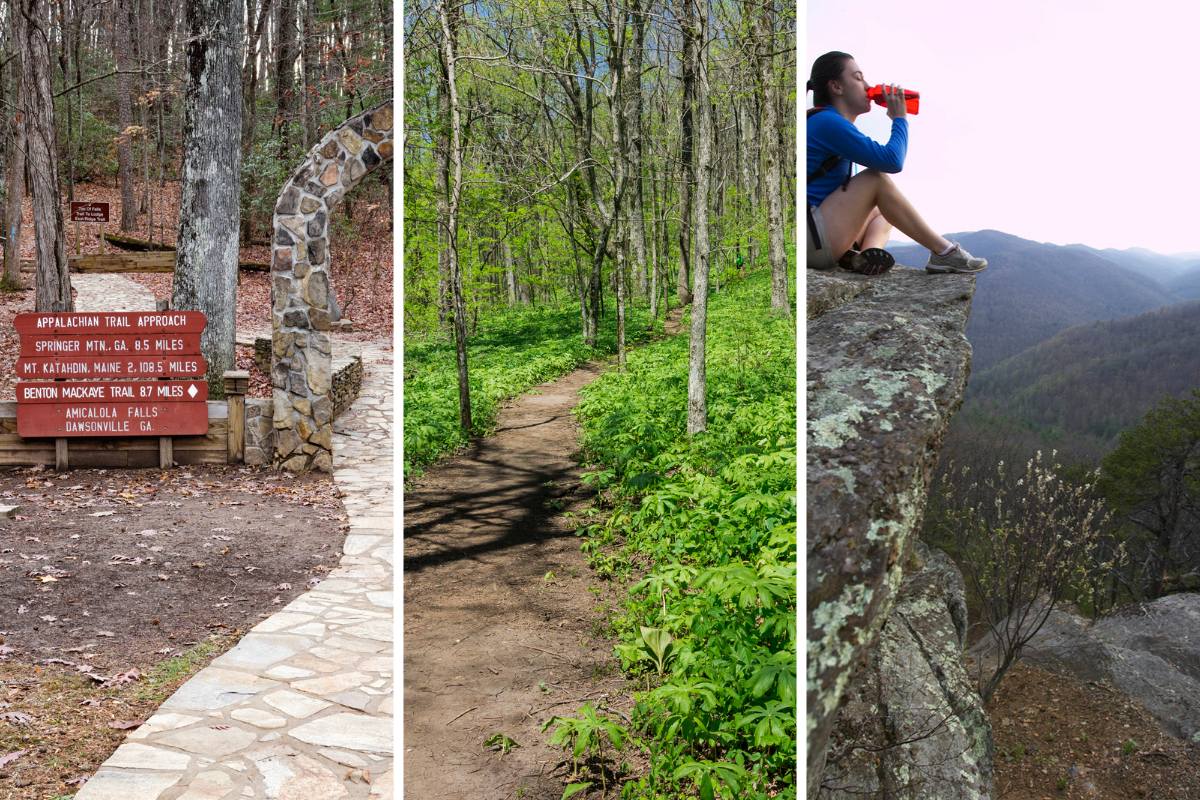
Amicalola Falls State Park. Falls plunge 729 feet in seven cascades; highest waterfall east of Mississippi River.

Richard Russell Scenic Highway. 14-mile-long road is not natural, but it winds through some of the most splendid mountain scenery in the Southeast. Along the way are trailheads to waterfalls and scenic spots.

Cloudland Canyon State Park. One of Georgia’s most scenic state parks. Rugged geology and beautiful vistas.

Brasstown Bald. At 4,784 feet above sea level, it’s Georgia’s highest mountain; four states can be seen from top.

Rabun Bald (Chattahoochee National Forest), rivals Brasstown in elevation and spectacular views.

The Pocket, Pigeon Mountain. Lush growths of colorful spring and fall wildflowers in a beautiful setting.

Rocktown, Pigeon Mountain. Stunning, house-sized boulders make it a rival of its famous cousin, Rock City near Chattanooga.

McLemore Cove. One of the Southeast’s most picturesque mountain valleys.

Chattooga River. Untamed and unimpeded; wild and rugged.

Sosebee Cove. High elevation, north-facing cove forest; rich diversity of shade tolerant trees, shrubs and wildflowers.

Cooper Creek Scenic Area (Chattahoochee National Forest). Harbors large hemlocks and white pines, some with bases as big as four feet in diameter.

Raven Cliffs Falls. Splendid Waterfalls; trail to them almost equally stunning.

Anna Ruby Falls. A must-see for visitors.

Macon’s Ocmulgee Heritage Trail

Friday, June 12th, 2009

ocmulgeetrailrgb400.jpgWinding along the Ocmulgee River in Central Georgia, the Ocmulgee Heritage Trail provides an environment for walking, biking, boating, bird watching and many other activities.

The Ocmulgee Heritage Trail is the only riverside trail and park system in Middle Georgia. The Trail is first and foremost a recreational resource providing an exceptional environment for walking, biking, boating, bird watching and many other activities. Easily accessible from Interstates 16 and 75 and downtown Macon, the Ocmulgee Heritage Trail provides a peaceful respite from the bustle of urban life.

The Trail is also a cultural resource that connects people and places to celebrate our shared history of life along the Ocmulgee River. Many of our community’s historic treasures can be discovered along the Trail: the Ocmulgee National Monument, Historic Rose Hill Cemetery, and Macon’s original water works. On any given day, people of all walks of life can share at least one thing in common – the pleasure of recreating and relaxing on the Ocmulgee Heritage Trail.

The Trail is a public-private partnership managed by NewTown Macon in cooperation with the Macon-Bibb County Parks & Recreation department. Other key partners include the Georgia Department of Natural Resources, Georgia Department of Transportation, Macon Water Authority, Ocmulgee National Monument, Urban Development Authority, and generous businesses, individuals and foundations.

Links

Salty Dawg Adventures

Wednesday, June 10th, 2009

saltydawgboatrgb400.jpgSalty Dawg tours are  conducted in a rugged 25+foot, twin engine, Parker Sport Cabin with comfortable seating for 6 passengers, sun awning, a private head and all required safety equipment in excellent working condition.

Enjoy an adventure exploring the marshes, estuaries, creeks, rivers, Intracoastal Waterway and Barrier Islands.  Delight in the antics of dolphin, birds and wildlife. Together, we’ll customize an outing just for you. The SaltyDawg also offers Island Charter service for hunters, birders, campers
and researchers to Georgia’s Barrier Islands.

saltydawgroyrgb238.jpgCaptain Hub, Roy Hubbard, is a Savannah native, U.S.C.G. Licensed Captain, University of Georgia Master Coastal Naturalist, U.S. Coast Guard Auxiliary, and the American Professional  Captain’s Association and serves on the Advisory Board of Georgia’s Blue Crab Commission.

saltydawgpeachbuddyrgb152.jpgPeach Hubbard (with Buddy the 4-legged Salty Dawg) is a UGA Master Coastal Naturalist, GAME (Georgia Association of Marine Educators, NMEA (National Marine Educators Association) and serves on the Board of ‘Clean Coast’ and is President of ‘The Dolphin Project’.

Peach and Hub are active with ‘The Dolphin Project’ and ‘Clean Coast’. They are members of the Richmond Hill Historical Society,  member of the U.S. Power Squadron/Tybee Light Chapter, the Ogeechee-Canoochee River Keepers, the Navy League / Savannah Chapter,  the U.S. Power Squadron/Tybee Light Chapter, The Nature Conservancy, the Sea Turtle Survival League/C.C.C.,  The Ossabaw Island Foundation,  the Cousteau Ocean Futures Society and several other nature conservation organizations. SaltyDawg Adventures  holds a Special Use Permit issued by the United States Fish and Wildlife Service to conduct tours of Blackbeard and Wassaw National Wildlife Refuges.

SaltyDawg is a rugged 25+foot, twin engine, Parker Sport Cabin with comfortable seating for 6 passengers, sun awning, a private head (toilet) and all required safety equipment in excellent working condition. Parker boats are made in the U.S. and used by NOAA (National Oceanic and Atmospheric Administration and the USFWS (United States Fish & Wildlife Service.

Links:

Sundial Charter Tours

Friday, June 5th, 2009

sundiargb600l.jpgCaptain Heidt and Sundial Charters offer a variety of tours on the Georgia coast including light tackle fishing for trout, bass and flounder.

Come explore Coastal Georgia by boat  with Captain Heidt. We offer  twenty years of experience in the waters of Coastal Georgia. Just a fifteen minute drive from the Savannah Historic District, Tybee offers a wonderful variety of eco-adventures for you to experience on a Sundial Nature Cruise. Our outings are intimate experiences because we make the time to get to know you, listen to you and answer questions along the way.

Sample Sundial Charters Tours

  • Visiting local dolphin and alligator families
  • Bird watching and beach combing on remote beaches
  • Light tackle fishing for trout, bass and flounder
  • Fossil hunting for prehistoric shark’s teeth and fossilized bones
  • Crabbing and cast netting

All trips are planned around the tide, weather, and your schedule. Trips are customized to suit your interests, with only one party in the boat at a time. You may have a maximum of six people. Larger groups can be accommodated with the use of extra boats.

Links

Wilderness Southeast

Thursday, June 4th, 2009

wassawseaturtlergb600.jpgWilderness Southeast Tours include Wassaw Island on the Georgia coast where each spring endangered loggerhead turtles crawl up on the beach to lay their eggs.

Explore Georgia’s true nature on a private tour arranged to accommodate your interests and itinerary. WiSE Nature Tours can provide a few hours or a whole day of wildlife discovery from birding to beachcombing and beyond. Visitors to Historic Savannah choose to explore by walking, paddling, or boating and by the wildlife and habitat they want to observe. Our expert naturalist guides help you investigate the natural history of coastal Georgia. Enjoy wildlife observation on your choice of excursions to beach, rivers, swamps, marshes, estuary, and maritime forests – all accompanied by friendly and expert naturalist guides. (more…)

Sea Kayak Georgia

Wednesday, June 3rd, 2009

seakayakingontidalcreeksrgb.jpgSea Kayak Georgia offers challenging trips for beginner, intermediate and advanced paddlers in a range of conditions.

Sea Kayak Georgia, located on Tybee Island, Georgia, offers the finest service in the kayaking community. Develop your skills as a paddler, purchase a kayak or quality paddling gear, or get out on the water for some much needed relaxation.

Sea Kayak Georgia offers challenging trips for beginner, intermediate and advanced paddlers in a range of conditions.

Join us for our fun three-hour salt marsh paddle every morning and afternoon, no experience necessary. Our seasoned guides and naturalists love to interpret the beauty of Coastal Georgia.

Our School of Coastal Kayaking schedules a full range of American Canoe Association (ACA) skills development training and assessment courses. We offer ACA Instructor Trainings & Certifications. We also offer British Canoe Union Star Awards and Coaching Certifications. Custom instruction is one of our most popular options. Rough Water Kayaking is one of the favorite Tybee Island programs. We can arrange for a day in the surf allowing you to experience the exhilaration and fun of Coastal Georgia’s warm waters and fun conditions.

Let us plan a custom trip just for your group ranging from a day paddle on one of our many rivers to an expedition down the Georgia coast.

Links

Bull River Cruises

Thursday, May 28th, 2009

bullrivercruisesdolphinrgb4.jpgBull River Cruises conducts dolphin tours and includes information about tides, marshes and the history of the region as a part of the tour package.

Bull River Cruises specializes in group tours exploring the natural beauty and history of coastal Georgia. From the Barrier Islands to the black water inland rivers, the “Island Explorer” - a 49 passenger excursion vessel - provides a unique experience, not soon forgotten. A variety of types of tours include:

  • Eco Tours
  • Dolphin Tours
  • Private Parties
  • Wildlife Refuge Tours
  • Wassaw Island
  • Ossabaw Island
  • Daufuskie Island
  • Savannah River
  • New Ebenezer Retreat

The Island Explorer
bullriverboat.jpgThe “Island Explorer,” is a 45-foot tri-hull, excursion vessel that seats 40 passengers comfortably and will accommodate 49 passengers. The Island Explorer was designed and built for coastal Georgia waters. Boat features include: padded seating, restroom, stereo, cordless PA system, USCG safety equipment; and it’s handicap friendly, and more. The Island Explorer is ultra stable - no seasickness.

A Typical Barrier Island Tour
A typical 2.5-to-3-hour barrier island tour would include:
Travel from Bull River to the Atlantic Ocean; a cruise through marshlands to barrier islands of the Georgia coast. Narration will include history, ecology and relationship of various parts of the Coastal Georgia ecosystem.