Chestatee River Canoeing Guide
From Turners Corner to the Highway 52 Bridge
Born in the rock faces of Blood Mountain, the Chestatee cascades out of the Chattahoochee National forest as one of Georgia’s best trout streams. From
Turner’s Corner to Georgia Highway 52 the river is one of the best canoeing streams in the state. Although the small watershed limits the rivers use to winter spring and rainy periods in the summer, the beauty makes it well worth the effort involved in
planning a trip for “when it rains.” Individual preferences for water levels also come into play here, since some people may not mind dragging their boat over shallow ledges. The scenery is excellent, particularly in the spring and early summer. Azaleas and dogwoods in April, laurel in May and rhododendron in early June provide small splashes of color against the rich magnificence of the white pines and hemlocks.
The first six miles or so from Turner’s Corner is down a green-lined tunnel, with no real rapids of note, but plenty of beauty. The first really challenging rapid is a ledge with a “s” turn (1) There follows a series of moderate rapids, with abrupt turns in the river revealing steep banks covered with white pines. The next rapid is just above the lunch spot, and is preceded by an old white pine covered in “old man’s beard” lichen. This runs best on the left.
Lunch is on the rocks by the pool below the rapid, and there is a possible emergency exit from the river on the west side. The walk out to a paved road is about two miles.
Below the lunch spot the action begins in earnest. Round the curve and there is a slide (2) best run on the right. Look back up this valley from the bottom for one of the better views in Georgia. Around another curve, and you are into the gorge (3). This is about three hundred yards of good rapids, which are a solid class III stretch at 3.0 feet on the gauge.
Below the gorge there are minor raids with a passage on the left signaling the entrance to Tree Rapid. Below Tree Rapid, more moderate rapids lead to the Staircase (5) which is quite demanding in low water, and could be dangerous in really high water (over 4 feet) on the gauge). Numerous switches from one side of the river to the other are required. Below Staircase are a few easy rapids down to Garnet Bridge. One-half mile below Garnet Bridge is Woolsey’s Folly (6).
There is a severe danger point below Grindle Bridge. Chestatee Falls is one of the prettiest cascades in Georgia, falling about 40 feet in a series of leaps. They also would be unforgiving of any canoeist unwary enough to enter them.
Most trips on this stretch of the Chestatee end at Grindle. The portage for the falls is atrocious. Steep banks and laurel thickets make canoe carrying impossible. If you choose to go on to the Highway 52 Bridge, it is better to leave the river at Grindle Bridge and re-enter at Copper Mines (7). This requires that you spot a car to shuttle canoes the two miles or so down river.
Cooper mines (7) rapid must be one of the most photogenic rapids around. At 3.0) feet, the rapid can be run at a variety of places with the right side being the most technically demanding. The center sluice is awesome to the inexperienced boater, but straightforward.
The river at this point has been swollen by the addition of Tesnattee Creek, and is runable more of the year. Two miles below Copper Mines there is a significant rapid (8) marked by a pile of blasted rock on the left about a quarter mile below a creek on the left. Land and scout this one. You may want to line or carry. Otherwise this stretch is Class I to Class II Another mile brings you to Georgia Highway 52 Bridge.
SHUTTLE NOTE: If you plan to run the section of the river below Grindle Bridge, spot a car at the bridge to shuttle canoes from there to the re-entry point at Cooper Mines (7).
CANOEING TIMES: At normal water levels, intermediate canoeists should allow about six hours to canoe between Tate Bridge and Grindle Bridge.
WATER GAGES: The water gauge at the Chestatee is located about 150 yards upstream from the Highway 52 Bridge. It’s always advisable to check the gauge before setting out, as the river levels of 1.5 are runable but draggy. Three feet is a good level but uncommon. A level of 4.0 feet would probably be great for intermediate and advanced kayakists, but high for open boats. Above 4.0 feet everyone should beware. One expert kayakist ran the Chestatee with a small group of similarly experienced boaters in the spring at 3.3 feet on the gauge. They moved quickly since it was storming. The run from Tate Bridge to Grindle Bridge took an hour and forty-five minutes. The same section at normal water levels generally takes intermediate canoeists about six hours.
THE WATERSHED: The Chestatee lies within the Chattahoochee watershed and was a tributary of the Chattahoochee River before Lake Lanier was formed. The Chattahoochee is a part of the Apalachicola-Chattahoochee-Flint system that drains an area of 19,600 square miles in Georgia, Alabama and Florida.
PROTECTING THE CHESTATEE: Established in 1994, Upper Chattahoochee Riverkeeper (UCR) is an environmental advocacy organization with more than 4,600 members dedicated solely to protecting and restoring the Chattahoochee River Basin.
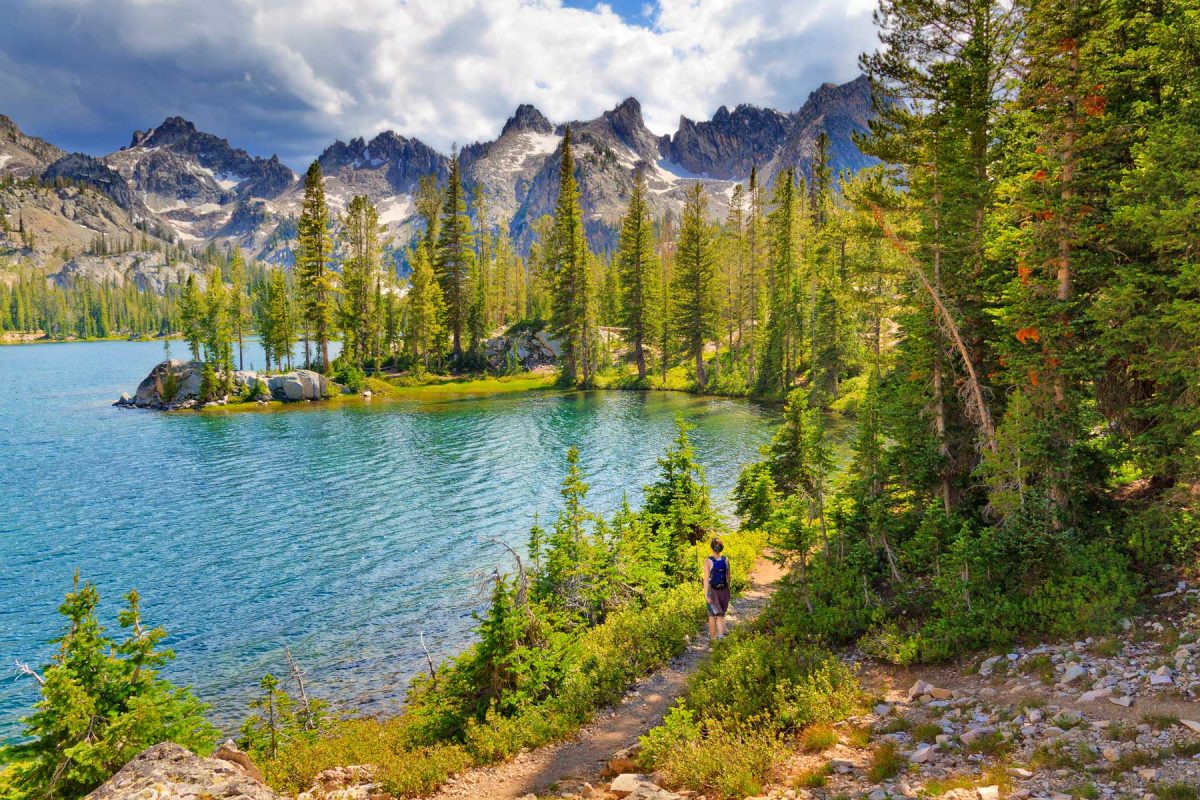
PHOTOGRAPHY: The photograph is by William Walsh of Lian and Felicity canoeing the Chestatee on July 13, 2007.